Skip to content

Heroes

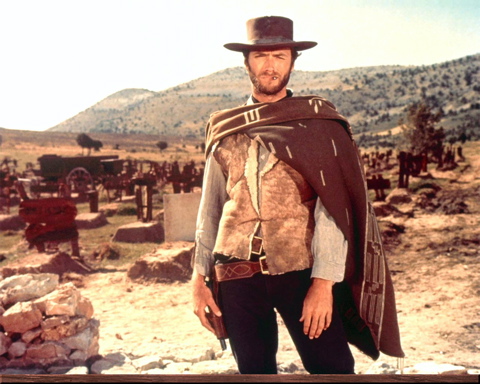
The other day, I was doing one of those “getting to know you” things and one of the questions was “If you had a time machine, when and where would you go?” Without any hesitation, I chose the old West. I’ve been watching a lot of Westerns lately, specifically Clint Eastwood Westerns, and today I’ve been thinking about why I like them so much.

The old West was a much simpler time. Most people lived off the land, stayed close to their family, got up at sunrise, and went to bed not too long after sunset. There was no TV, no radio, and entertainment was simple: people just danced, told stories, whittled, and generally just relaxed.

I’m a simple man. I’ve often thought of packing everything into a storage unit and living out of a VW Westfalia Camper with nothing but the essentials: no computer, no internet, no TV. I think I could do it. That’s what I love about camping. It’s just you and nature, no distractions. I think my love for Westerns goes beyond this internal minimalism though.

The Clint Eastwood Western generally follows the same format. The story is centered on one lone wanderer with no apparent past. He’s smart, crafty, reads people well, and most importantly, he’s the fastest draw anyone’s ever met. He speaks only when necessary, and says more with his eyes than most people do with their mouth. He’s noble, honest, and stoic, a man of the people. He always stands up for what he believes in. He is a defender of truth and justice and a protector of all women everywhere. In short, he lives by a higher law.

I think this higher law is what draws me to these westerns. The hero in these stories lives by a certain code that is generally agreed upon by the public, only the hero never strays from it. The villains are those who violate this code, lying, cheating, stealing, killing, and generally mistreating women. The public wants to see an end to the villainy, but is powerless to do anything until the hero comes along and reminds them of the code and the power that comes through its strict adherence in large numbers. He unites them under a common goal.

We live in much different times today. There are very few signs of any sort of code generally accepted by modern American society. People lie, cheat, steal, and mistreat women without any hesitation. It’s okay as long as you don’t get caught. Our celebrities go from partner to partner, as if they’re climbing some invisible ladder that takes them to greater fame and fortune. These are our heroes. The only thing that unites us as a culture is our love of money and thirst for fame.

Joseph Campbell speaks of this,

[…] Another reason for the high level of violence here is that America has no ethos. […] In a culture that has been homogeneous for some time, there are a number of understood, unwritten rules by which people live. There is an ethos there, there is a mode, an understanding that, “we don’t do it that way.” […] But in America we have people from all kinds of backgrounds, all in a cluster, together, and consequently law has become very important in this country. Lawyers and law are what hold us together. There is no ethos. […] What we have today is a demythologized world. (The Power of Myth, 10)

That is what I love about Westerns and the old West. It was a time when America was united under a common ethos, a common code. There were living heroes back then, like Wyatt Earp, who lived by this code as best as humanly possible and defended it to their death. We live in a society with very few heroes. Children have no one to look up to but those faces they see on TV or at the ball game. The family as a unit is failing constantly and children are left to come up with their own ethos, their own code of values.

I was raised by two parents who gave me an ethos very early on. They taught me how to recognize true heroism in a society without heroes. They taught me what was truly important in a society, and more importantly, in my own life. As I watch these Westerns, I am reminded of this ethos, and as I continue on that inward journey of self-discovery, I find more and more that the qualities I value most in a person and in myself are those same values possessed by the Western Hero. He has become a part of my subconscious and the more I try to grow, the more he surfaces.

A society needs heroes. A society needs myth. A society needs an ethos. Without them, it will fail. Every member of a society is on his or her own journey of self-discovery. Without heroes to anchor us to a common ethos, I fear what will come out of the subconscious. More than this, I fear the fruits of such a society.
My New Project

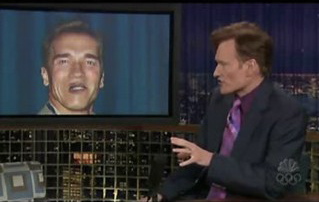
I was watching Conan last night and it got me thinking. Have you ever thought of what you would say if you were brought on a talk show? What stories would you tell? Why is it that only celebrities get to tell their stories? What makes them any more special than any of us? I’ll tell you what does… nothing. We all have interesting stories to tell. We all have at least one story that we love to tell that is guaranteed a laugh. I’ve been working blue collar jobs for a long time now and just about everyone I’ve worked with in these jobs is far more interesting than any of these celebrities.

So here’s my idea, I want to start showcasing these stories. I want to start showcasing your stories. My plan is to start videotaping people, starting with my friends, as they do nothing more than tell a story. I don’t care what it’s about. It can be funny, sad, tragic, or just plain interesting. It can be a group of people or just one. It doesn’t matter. What matters are the stories.

Everyone loves to talk about themselves. I believe Bradbury said it best, “If we come at him right, talk him along, and give him his head, and at last say, What do you want? . . . every man will speak his dream. And when a man speaks from his heart, in his moment of truth, he speaks poetry.” I only ask that you let me put this poetry on tape and then on the internet to share with the world. This cannot work without your participation. I will not edit the stories in any way and will do my best to make the whole interview process a comfortable one. I want to show you in the best conditions possible. I’m going to call the project “Interviews with the Common Man… or Woman.”

So, if you’re interested, start thinking of a story and send an email to Interviews@faberfilms.com and we’ll get started. If you don’t live in the Las Vegas area, I’ll try and find a way to make it work. I want to hear your stories. This will not work without the participation of my friends and family. The more stories, the better.

The 5 Mythical Creatures I Would Bring to Life

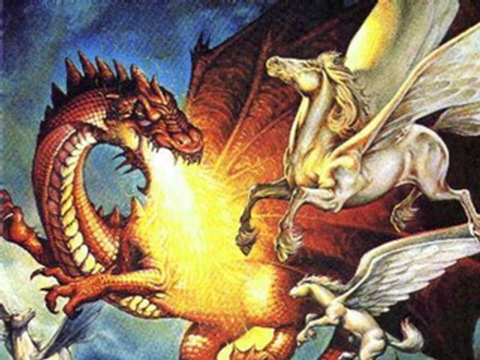
We’ve read about them in books, we’ve watched them in movies, we may have even drawn a few in our classroom doodles, but none of them exist. They’re magical, they’re mystical, they’re mysterious, and often feared. They’ve been the goal of many conquests and the subject of many artists. They are the creatures from ancient folklore and modern day myth. If I had my own personal Genie, these are the ones I would wish to life:

The Genie – Without him, none of this would be possible. Everyone’s thought of what 3 wishes they would make if they had Aladdin’s lamp. I don’t even care about the wishes. How cool would it be just to have a genie friend? I’m talking Robin Williams from one of the greatest Disney movies of all time, or that girl from I Dream of Jeannie, she was hot! Actually, come to think of it, I just want to be Aladdin. He’s got a super monkey thief for a best friend, a flying carpet, a Genie, and a hot princess girlfriend that wants nothing to do with the pomp and circumstance of being a princess. It’s every guy’s dream.

The Dragon – I’ve wanted a dragon since before I even knew what they were. They’re basically flying lizards that can breathe fire. How cool are lizards? I’ll tell you how cool … very. I used to catch them in my yard in Texas and keep them in jars, hoping some day they would sprout wings and start breathing fire. It never happened, but the search continues. Mine would tell jokes like the Luck Dragon from Never-Ending Story, but mine would look less like a dog and I wouldn’t scream like a girl while I chased bullies into dumpsters. I would need to get a sword though, because you can’t ride a dragon without a sword. That’s just not cool.

The Gargoyle – Remember that old cartoon they played as part of the Disney Afternoon? I want one of those guys. Or even one of those Gummi Bears with their gummi beary juice. I’d settle for just going to their gummi beary land with that cool irrigation and those castles and such. How cool would it be to live in a castle with running water … with your own personal gargoyle bodyguard … and tubs full of gummi beary juice? Do you know the street value of pure unadulterated gummi beary juice? We could make millions! MILLIONS!

The Pegasus – Screw Unicorns with their fancy horns and magical healing powers, I want my horse to fly. Nothing says cool like riding a white horse into a battle, across a ravine, or into the sunset. Now imagine that same horse can fly. How much cooler is that?! It’s like taking Clint Eastwood from all those westerns where he saves the girl from the evil outlaws and crossing him with Tom Cruise from Top Gun. I love the rush you get from riding a galloping horse, cross that with the rush of flying and I’m in heaven. Sure there’s stories of Pegasi with horns, they call them alicorns supposedly, but come on, winged Unicorns? That’s just going too far.

The Leprechaun – I’m not talking about the scary leprechauns from those movies. I’m talking about the old fashioned mischievous Irish leprechauns, the ones that are quick with a joke, or to light up your smoke, but there’s someplace that they’d rather be. I’m singing la da, diddy da da, la daaa, diddy daaa da … sorry. Forget about the gold, you could just sit for hours and watch the leprechaun get drunk and curse at the tv until he passed out in a pool of his own leprechaun vomit. Then you could get him his own little leprechaun camera crew to follow him around for his own little leprechaun reality show on MTV which would be cancelled after 2 seasons when he accidentally dropped a pot of gold on a magical unicorn, then brutally stabbed it repeatedly with its own horn until it stopped screaming and he’s forced into rehab by the United Order of All Leprechaun Proceedings (UOALP for short. It’s a very secretive and highly respected organization. I could get blacklisted for even writing their name. Forget I said anything). Plus, if leprechauns are real, then rainbows are more than just refracted light, and that opens the door to many more mystical creatures like Care Bears and Rainbow Brite. She was hot. You broke my heart, Rainbow Brite. You broke my heart.

Legends

The other day, I was watching an old episode of Dinner for Five, which is a show on IFC hosted by Jon Favreau (Swingers and Elf), where a group of actors, producers, directors and/or writers get together and just talk about whatever, whether it’s old gigs they worked on, or why the Yankees suck. Anyway, I don’t remember who was on the other day, but they were talking about the old film legends like Bing Crosby, Fred Astaire, Humphrey Bogart, and Clark Gable. They mentioned that there aren’t really any stars like that around today, stars who have such a commanding presence that it goes beyond the screen. That got me thinking, it’s true, but why?

One of them said it was because nowadays, you rarely see film actors that start on the stage. Most of them never set foot on a stage during their career. I don’t know if I buy that. That may be true, but what does the stage have to do with an actor’s screen presence. Hardly anyone goes to the theatre anymore. I would argue that if anything, starting on the stage could hurt an actor’s screen presence these days.

I watched an Elvis impersonator the other night and had a blast. His name was Trent Carlini, he went all out, he may or may not have become my hero. It’s still under review. Apparently, he had a hit record in Europe by the time he was 17, but decided he wasn’t doing what he loved, so he quit and dedicated his life to the King. We wondered what it was that made someone do this, and then wondered if there were any stars big enough today to warrant future impersonators. Sure, you’ve got the old guys, like Neil Diamond, Wayne Newton, and Michael Jackson, that already have impersonators, but will any of the new stars have impersonators? Is anyone big enough?

I’d say the only one that comes close these days would be U2 and Bono, but they’re not exactly new. As far as actors go, the closest you get would probably be Denzel Washington, Morgan Freeman, or Clint Eastwood, but again, they’re not exactly fresh from the womb. So where are our Beatles, our Elvises (Elvii?), our Clark Gables, our Fred Astaires? Will there ever be another legend like them, or are there just too many competing for that title?

I think I finally found an answer. I woke up today and came out to find my roommates watching VH1’s 100 Greatest Child Actors. I think that’s what happened. I think we know way too much about our stars today. There’s no mystery, their images are shattered with every click of the camera in the hands of the paparazzi. We have cable channels dedicated solely to the worship and fascination of celebrities. You can’t watch the news without hearing about Trump vs. Rosie 2007, or “Bradgelina”s new baby, or why Tom Cruise is clinically insane.

The only stars today that have any sort of mysterious, larger than life screen presence are the ones that stay out of the headlines, like Matt Damon, or Denzel Washington. We are the ones ruining the legends. We’ve turned from worship to priest craft as our hunger for fame has created a multi-billion dollar industry dedicated to the exposure of the deepest, darkest secrets of our most idolized stars. It’s our own fault, we take the stars of today and lift up their skirts (often literally), exposing everyone of their hidden faults.

God is only God because His worship requires faith. It’s the same with the old legends. People didn’t see the actors on screen, they saw an amalgamation of every last character they ever played, making them larger than life. No one knew the actual actors. They weren’t real, only the guy on screen or on the stage was real. They had no weaknesses. They were perfect. If we knew every last weakness God ever had, would he cease to be God?

Transcendence

For the first time since I was a child, I spent the entire day reading a book. I forgot what an amazing feeling it was to lose myself for hours at a time inside some world created by someone else. There’s always something just a little bit familiar to these worlds. If there wasn’t, we could not become so lost exploring them. This story, however, seemed more familiar than any story I’ve read in years.

I just finished reading Ender’s Game. I literally closed the book just seconds before I started writing this. I identified personally with little Ender Wiggins. It was strange to watch as he went through these strange worlds in ways that were so familiar to me. In this book, a little boy quickly became isolated because he was different. Many adults would praise him and many worried he was not living up to his potential. His peers mocked him and played tricks on him. Any displays of weakness were quickly snatched up and used against him. So he quickly learned to shield his weaknesses from the view of others.

He began to isolate himself voluntarily. He trusted no one and only let down his shield in the privacy of his own room. He had small pockets of friends here and there, but even they were only allowed to see what he wanted them to see. He was never comfortable in large groups, always sensing their judgment or possible danger, so he sat back and watched them from a distance, observing their interactions, learning more about himself and mankind through the interactions of others than he ever could in any school. Still, he isolated himself, still he watched, still he learned, still he longed for a childhood he could never have; companionship he thought always out of reach.

It’s interesting to me the way a text, such as a book, or a movie, or a song can connect with us on such a personal level that we transcend our own existence. We begin to see our lives from the outside, through the eyes of some character in some story, taking place in some other world. The story is the same. It is our own story, but the characters and the setting are all different. This is what draws me to the art of storytelling. Whether through books, or movies, or music, I am always looking for new versions of the same old story; different perspectives of my own story. I wonder if others are reading the same stories and connecting on such a personal level as I am.

On the flight home from visiting my family for the holidays, I watched a couple episodes of Scrubs. This show is another one of those texts that takes me out of my regular frame of mind. It’s not quite as transcendent an experience as some, but this show always reminds me of my buddy Scott. It’s uncanny the similarities between the interactions of JD and Turk and myself and Scott. It goes all the way down to the mannerisms of the individual characters. It’s like someone took our life and hired a team of writers to make it more interesting and cram it into 30-minute segments. I can never watch an episode of Scrubs without being reminded of Scott, and it never fails to put a smile on my face.

While I was out visiting my family, trying feebly to adjust to the three-hour time difference, I watched Hotel Rwanda. This proved to be a completely different kind of transcendent experience. This was not a reminder of past or present experiences, but a demonstration of what-ifs. It appalled me to watch as these people were stripped from their homes and their loved ones as their country tore itself apart.

In this story, one man comes at first unwillingly to the aid of many of his friends. Over the course of the story, he rises to conquer greater and greater obstacles. But it is not this man that I identified with. This time, I connected with the cameraman played by Joaquin Phoenix. His job was to capture as much of these people’s tragic story as he could so that his superiors at the major news network would get more viewers. His mission, however, was much more noble, and much more tragic than that.

There is a scene in which all the foreign nationals, all the white people, are leaving on a bus, leaving all the Rwandans to deal with the savagery on their own. A group of children then come walking down the street, singing and cheering only to be separated into Rwandan and National, chum and prize fish. Nuns are separated from the orphans they have cared for and come to love, forced to leave them to a grim fate. The cameraman comes out and films it all, but it gives them little hope.

Earlier in the film, the cameraman is talking with Paul, the hero of the story. Paul tells him that he’s glad that the cameraman is filming all the savagery, that now the west will be forced to do something. The cameraman replies simply, “I think, if people see this footage, they’ll say ‘Oh my God, that’s horrible,’ and then go on eating their dinners.”

I couldn’t help but wonder what that would be like if it were me. What would I do if I were there, the only one able to tell these people’s story to the world? What if those were my friends being torn from the orphans they had grown to love, leaving those orphans to uncertain death. Would it all be for naught?

This is the reason I chose film and media as a possible career. I want to tell these stories. I want to tell my story. I want to be a voice for the voiceless; I want to be a tool for the development of some young mind somewhere, destined for greatness; I want to be a speaker for the dead, but will it all be for naught?

All of these transcendent tales end with the hero accomplishing some great feat, or overcoming impossible obstacles. All those trials they overcame, all those lessons they learned all prepared them for that one final battle, where they emerge bruised and battered, victorious, and a completely different person than the one that began the story.

Isn’t this what we’re all trying to do? We’re all learning, we’re all growing, we’re all preparing for some unseen event in the distant future. No one really knows what it will be; it will probably be different for each of us, but maybe that’s the point of all these stories.

Maybe these stories can’t help the victims of the present. Maybe they’re not supposed to. Maybe they’re only supposed to help future societies. Maybe we’re all preparing each other unknowingly for that final battle we’ll all face someday where we’ll emerge bruised and battered, victorious, and a completely different person than the one that began the story, ready to pass our boon on to a society that may or may not be ready.