Skip to content

This Week in Movies – 5/26/10

Update: So you probably already realized this, but I’m an idiot and posted next week’s movies this week. Hopefully I didn’t ruin your weekend.

In Theaters:

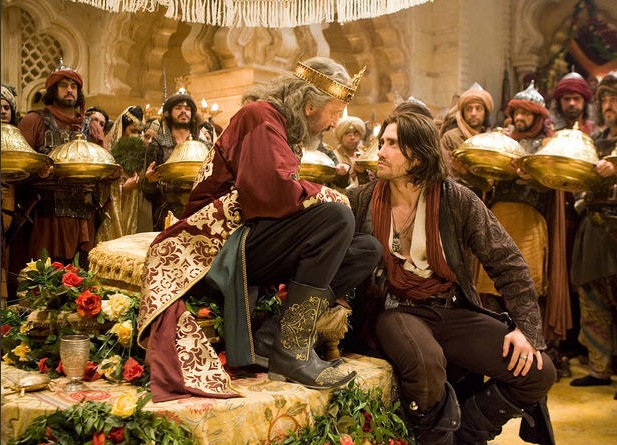
  • Prince of Persia: The Sands of Time – Donnie Darko leaves the Mountain and dons a British accent to do some Parkour. It’s a Bruckheimer movie, so expect some big dumb fun, but it’s also based on a video game, so watch at your own risk. Then again, he did make a theme park ride into a pretty entertaining set of movies, but Gyllenhaal is no Johnny Depp.
  • Sex and the City 2 – I won’t waste your time. You already know if you’re going to be watching this movie or not.

On Video:

  • Dear John – Amanda Seyfried and Channing Tatum write some dude named John a bunch of letters, or something like that.
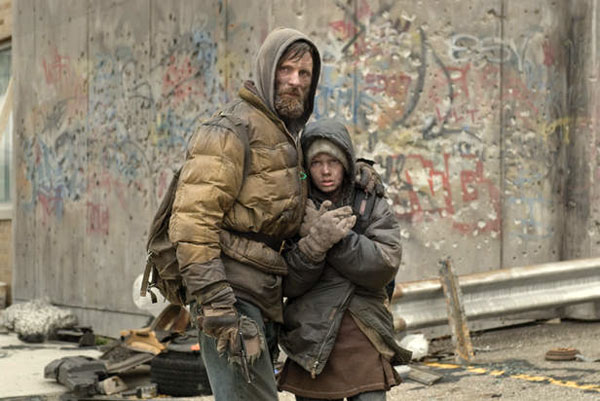
  • The Road – Post-Apocalyptic tale of Viggo Mortensen and his son struggling to survive in an ashy wasteland. Buy the book, watch the movie, then lend them both to a friend. This is storytelling at its finest.

Review: The Road by DrChocolate

TheRoad

As Luke said in the previous This Week in Movies, “this is storytelling at it’s finest.” I wholeheartedly agree. To frame my review of this superb film I’ll give you some insight into me – I’m a father. I have two sons. I love them more than it is possible to describe. When I read the book we were still waiting for our second to be born – so I was a father of one son, like the main character. Undoubtedly this has colored my opinion of the movie and the book. Due to this, and without any qualms, I freely admit that I sobbed my way through the book, and now the movie. It was impossible for me to not embed myself, and my sons, into this story; impossible to not see my son’s face in the face of The Boy and to ponder what I would do if I were The Man. In that way, this movie is devastating, it’s uplifting, it is hopeful, haunting, bleak, and beautiful.

For those not in the know, “The Road” follows an unnamed father and son traveling across a perilous US that has been blackened and destroyed by an unspecified disaster. The road is fraught with nightmare encounters with roving, violent gangs, unscrupulous thieves, cannibals and every other horror imaginable. As humanity and morality disintegrates around them the man tries to instill and keep compassion and decency alive in the boy, they strive to carry they fire.

Viggo Mortensen and newcomer Kodi Smit-McPhee are inspired as the Man and Boy. Their father-son relationship is tender and believable. Mortensen, with his distinctive weary intellectualism, is superb as a father desperate to keep protect his son from evil. The scene where Mortensen instructs his son on how to properly commit suicide with a pistol (in order to avoid fates worse than death) is particularly crushing. In turn Smit-McPhee is excellent as the story’s embodiment of innocence and charity, of the flame that needs to be protected. In truth some of the more haunting and nightmarish scenes I’ve ever seen are in this movie – from the house with the cellar, to the thief on the beach, to the flashbacks with the Man and his wife (an immensely effective Charlize Theron). However, the soul of the film is that one can remain “good” in the face of such evil and inhumanity, and it is huge. It is encompassing, and though it is nestled in one of the more frightening celluloid landscapes I’ve experienced, it is inspirational and powerful and alive.

Director John Hillcoat (who’s feature debut was the disturbingly violent but outstanding Australian western The Proposition), with his stars, and crew, has crafted what, to me, amounts to a masterpiece. Granted he was blessed with the best piece of fiction I’ve read in at least a decade, maybe ever; but he still was able to turn Cormac McCarthy’s sparse, aptly vague prose into a visually stunning, emotionally rending, inspiring film. There are additional bonus points to be handed out to an evocative score by legendary musician Nick Cave (who penned the script for The Proposition) and to a stable of brilliant, smaller performances including an almost unrecognizable Robert Duvall and Michael Williams as a wretchedly desperate thief. The Road is a very difficult watch, that is certain, but I will recommend it to everyone – without hesitation for, ultimately, it is one of the most beautiful movies I have seen about hope, humanity, and love. Read this book. Watch this film.

(Complete Side Rant Alert: I still can’t comprehend how the Weinstein brothers allowed this movie to be ignored and overlooked. The book was a NY Times #1 bestseller. It was a part of the Oprah Book Club. It won a freaking Pulitzer. Millions of people read it and instead of a wide release with a heavy awards season push (which I’m sure would have garnered it a few important nods) they dumped it into a few dozen theaters and let it run for like 4 weeks and then pulled it. What is the thought process behind this idiocy? Who did that help? It’s a superb movie based on a popular, well-regarded novel and it was completely abandoned by it’s parent company. Meanwhile Old Dogs debuts the same weekend on 3400+ screens. Bah.)

Review: Robin Hood by DrChocolate

RobinHood

Hollywood sure has a jonesing for origin stories these days. This isn’t your typical Robin Hood movie of merry thievery and peril at the hands of the Sheriff of Nottingham. You don’t even see Robin holed up in Nottingham Forest with his band of righteous robbers until right before the credits roll. No Errol Flynn here, Ridley Scott’s “Robin Hood” is a mix of origin story, political chicanery, and some deft battle sequences.

Scott and his screenwriters play fast and loose with British history, and by extension French history. However, if Tarantino and his fabulous “Inglourious Basterds” can be praised to the skies even as it completely redraws the facts to the most important years of the 20th then surely this can be forgiven as well (that is not to say that this is nearly as good as IB). Fairly convoluted plot made short: disenchanted with political leaders after a decade of foolish decisions in the Crusades, peasant archer in King Richards army Robin Longstride (Russell Crowe) serendipitously finds his chance to leave the army and return home. That chance leads him and his core of merry men to become ensnared in medieval identity theft, political intrigue and evil-French machinations. Action and romance ensues.

Crowe is effective as Robin; and he and a characteristically superb Cate Blanchett have a believable, mature romantic chemistry. Crowe does dial back his typical imposing physicality a little and plays Robin with a bit more mirth than I was used too in a Crowe role. (Which doesn’t mean that he doesn’t exhibit his signature reluctant-hero-taking-up-the-noble-cause mannerisms.) However good these Oscar winners may be, the movie is completely stolen by an intellectually feral Mark Strong. As a devious member of King John’s court, Strong prowls the movie with a magnetic menace. Each time the movie deviated from him I wondered what his character was doing when we weren’t seeing him.

Overall, I enjoyed this movie far more that I thought I would. It does drag in parts (especially the overtly political gobblydegook about free states or some such preaching). But my main quibble comes with the climactic battle sequence, minor plot spoilers ahead, but if you’ve seen trailers I’m not blowing anything you haven’t seen already. The last battle takes place on a beach while the French invade by sea. For some reason Scott and company decided to stage a medieval D-Day. I was mildly uncomfortable with the fact that the invasion is filmed like the opening of “Saving Private Ryan.” It’s so similar it completely displaced me from the film. From underwater up shot of soldiers drowning in the water to the disembarking soldiers getting mowed down as they spill over the sides of their vessels. It just felt cheap and designed to illicit emotion the scene didn’t earn. Secondly, I’m sick of the incessant need to have the love interest show up in battle, disguised by a helmet, which she then removes, and SHOCKER it’s Marion! WHA-WHAT woman can fight too? Oh that Marion, she’s so empowered. Give it a rest already. I’m all for female empowerment, but the need to shoehorn an enlightened ’90’s woman into the 12th century is beginning to get tiring. Everyone should have hung this trick up after Pete Jackson mastered it in The Return of the King.

Anyway, pet peeves aside, it’s a fresher, rejiggered take on a familiar legend, the Ridley Scott powered battle scenes are exciting, there’s some fun stuff with the Merry Men (Keamy from Lost is Little John and, for once, is actually likable *sniff*Lost. I miss you already*sniff*), the leads are good, and the required Robin Hood arrow POV shots are pretty thrilling too. Recommended.

This Week in Movies – 5/17/10

I got sick of not knowing what came out. We’ll see how long this lasts.

In Theaters:

  • Shrek Forever After – Nothing I say here will keep people from seeing this movie. For what it’s worth, I enjoyed the 2nd one.
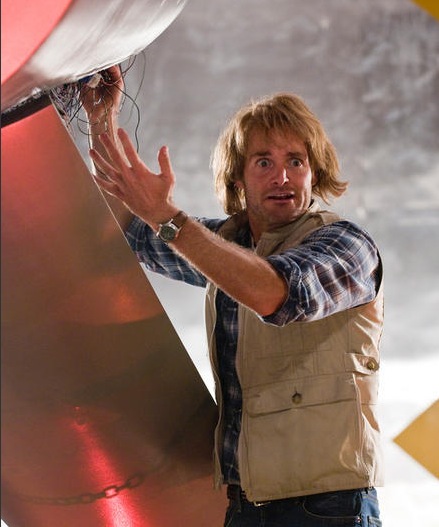
  • MacGruber – I’m skeptical of any 30 second SNL skit made into a movie, but the commercials say it’s funny. Plus it’s written by the geniuses behind most of the digital shorts. I’ll catch it on DVD, I’m sure people will like it. Bonus points if Betty White’s in it.

On Video:

  • Valentine’s Day – This romantic-comedy employs the shotgun method of filmmaking, fill your movie with as many names as you can and you’re bound to hit something. Anne Hathaway and Topher Grace hit Megan, so I’m screwed.
  • Invictus – I’ll watch anything directed by Clint Eastwood and anything Matt Damon’s in. I guess I have to watch this one twice.
  • The Spy Next Door – Stars Jackie Chan, George Lopez, and the back of my hand to your face if you even think of renting this.
  • Extraordinary Measures – I could never figure out what this one was about from the trailers. Apparently some kid is sick and Harrison Ford and Brendan Fraser try to invent some sort of super-drug to cure him before Keri Russell takes over the world with her curly brown locks. At least, that’s what I got from the trailers.

Review: Hunger by DrChocolate

Hunger Fassbender

“Hunger” is vivid and visual. It is also gut wrenching, brutal and unrelenting. It flows between scenes of stunning beauty and stunning violence. It’s quiet and pensive and vicious and visceral. It is based on the very real events surrounding imprisoned Irish Republican Army foot soldiers. First time filmmaker, and artist, Steve McQueen has crafted a real gem. But it is definitely not for everyone, or every stomach. When people say “art film,” I now tend to think the term was coined for “Hunger.” It is vividly beautiful in its harrowing depiction of the strength of the souls resolve and depths of human cruelty. It is also very easy to see how some will find the film indulgent, slow, and in danger of caving under it’s own preponderance.

“Hunger” takes place within the notorious confines of Maze Prison during The Troubles (the longest sustained period of wide spread violence between Ireland and England, generally lasting from the late 1960’s to the Belfast Agreement in 1998, thousands were killed on both sides.) The film starts in the midst of the IRA inmates Blanket Protest. (Here comes the history, if you want to skip this part be my guest. Known IRA members were held as common criminals and not as political prisoners. The difference being that a political prisoner is afforded many more rights and privileges than a criminal including the wearing of their own clothes, no prison work, more visits, etc. In protest of being seen as common criminals the incarcerated refused to wear prison clothes, going naked or with blankets wrapped around them, refused to shower and shave, etc. It escalated to where the guards refused to change out bathroom buckets, all furniture but mattresses were removed, beatings increased. In turn, the prisoners retaliated by smearing their excrement on the walls, never leaving there cells unless under considerable force, dumping their urine under the doors, and so forth. Each side unrelenting in their resolve and brutality.)

The plot, such as it is, is presented like a Christian triptych, a three-panel story with each panel loosely hinged to the next. The first panel concerns a new prisoner, Raymond, and his joining the Blanket Protest. Much of this first section is very nearly a silent film, almost reverential; McQueen lets the images alone speak loudly and effectively. Even the smearing of feces on a wall is approached as a solemn, dignified act. The reverence is only, shockingly, broken with viscous beatings followed by haircuts and hose showers and some particular invasive searches. Interspersed with the protest are glimpses of the life of one of Maze’s guards and the toll the job takes on his life. The second panel is the tour de force section of this film; it’s the power, pop, and heart of the film. (Additionally, for film geeks, it contains the longest, single sustained shot in celluloid history at over 17 minutes, a new roll of film had to be specially made for the shot.) In the scene, de facto prison leader Bobby Sands (Michael Fassbender in a magnetic performance) and a worldly Catholic priest (Liam Cunnigham) argue the merits of a hunger strike. It is absolutely stunning. It is riveting. Fassbender and Cunningham are pitch perfect and magnetic. Really, this scene is something to behold; it is something special, I was enraptured. The outcome of the debate solidifies Sands resolve to begin staggered hunger strikes, to up the protest, he being the first to begin. The third panel returns to the silent, respectful slant of the first. Sands begins to refuse food and eventually wastes away in protest (Fassbender is again riveting and apparently lost over 40 pounds to appear starved). Watching Sands waste away into skeletal bed rest, having to be carried to the toilet and pitied by his attending physician is gut wrenching; the self-inflicted violence effectively mirroring the administered violence of the first panel. “Hunger’s” third panel nails down the films gut-punch, it is emotionally draining.

Throughout the film however, there was a quiet gnawing at the back of my head that soon began to really pound away. That pounding boils down to this: It’s obvious that McQueen respects these prisoners and their will power. But it doesn’t stop there, McQueen seems to be taking these protesting prisoners and their starving leaders down the path of beatification and on towards sanctification without acknowledging that, frankly, these men are violent at best, terrorists at worst. It is easy to romanticize the IRA and it’s struggle. The scrappy Irish freedom fighters with their lilting voices and shocks of red hair fighting tooth and nail against the big bad machine of militarized, late-millennial Britain. Their sustained, armed struggle for unification over the oppression of an occupying superpower is easy to view through shamrock-tinted glasses. I know. I’ve studied the history and at times have over simplified their case; I’ve “supported” them and respected them and, to a degree, still do. But, in truth, the IRA is a violent and often brutish entity and is guilty of quite a few shocking, and despicable, acts. The Troubles, particularly at the time this movie takes place, were such a boiling mess of tit-for-tat aggression and dirty tactics that both sides are equally to blame for the escalating horrors. There is no acknowledgment of this in the film however. McQueen, who surprisingly is a native born Englishman, and helped write the screenplay, seemingly lays all fault, mistakenly, at the feet of Thatcher’s England. He would have the unfamiliar believing that all the prisoners were falsely accused guardian angels of the Emerald Isle. His blind acquittal of these men is unnerving. (If you’re interested, here’s a pointed British review of the film that more succinctly sums up, with history!, what stuck in my craw about the pardoning manner of this film).

I must admit though that, despite my unease with the historical whitewashing, I was thoroughly moved and marginally devastated by this film. Regardless of politics and your view of Irish Republicanism and Unification if you can stomach the disturbing elements of this film it is well worth the endeavor. It is gorgeously made and visually stunning – each shot could be freeze framed and reproduced as art worthy of a prominent wall hanging. The idea of the body being the last weapon of protest is resonant. The performances, especially the star-making turn by Fassbender, are moving. Its overall impact is powerful and long lasting. It may take some patience, but consider “Hunger” highly, highly recommend.

(Stay tuned, too, this is a two part-er review of new-ish films now on DVD, that flew under the radar and into few theaters, that both deal with The Troubles. The second of this utterly dichotomous pair is “50 Dead Men Walking,” which review will come along shortly. You’re riveted, I know.)